
February 24, 2026/
No Comments
Non-Saudi Property Ownership in Saudi Arabia 2026: Legal Framework, Conditions & Investment Opportunities Saudi Arabia’s real estate sector is undergoing...
Choosing the right location is one of the most important decisions in real estate development. A strong site can support demand, accessibility and long-term usability, while a poor location fit can weaken a project even when the design and construction quality are strong.
In Riyadh, location decisions should be made at district and property-type level, not only by choosing a popular part of the city. Residential, commercial and mixed-use developments require different forms of access, surrounding services and market demand.
This guide explains the main factors developers should evaluate before selecting a real estate project location in Riyadh
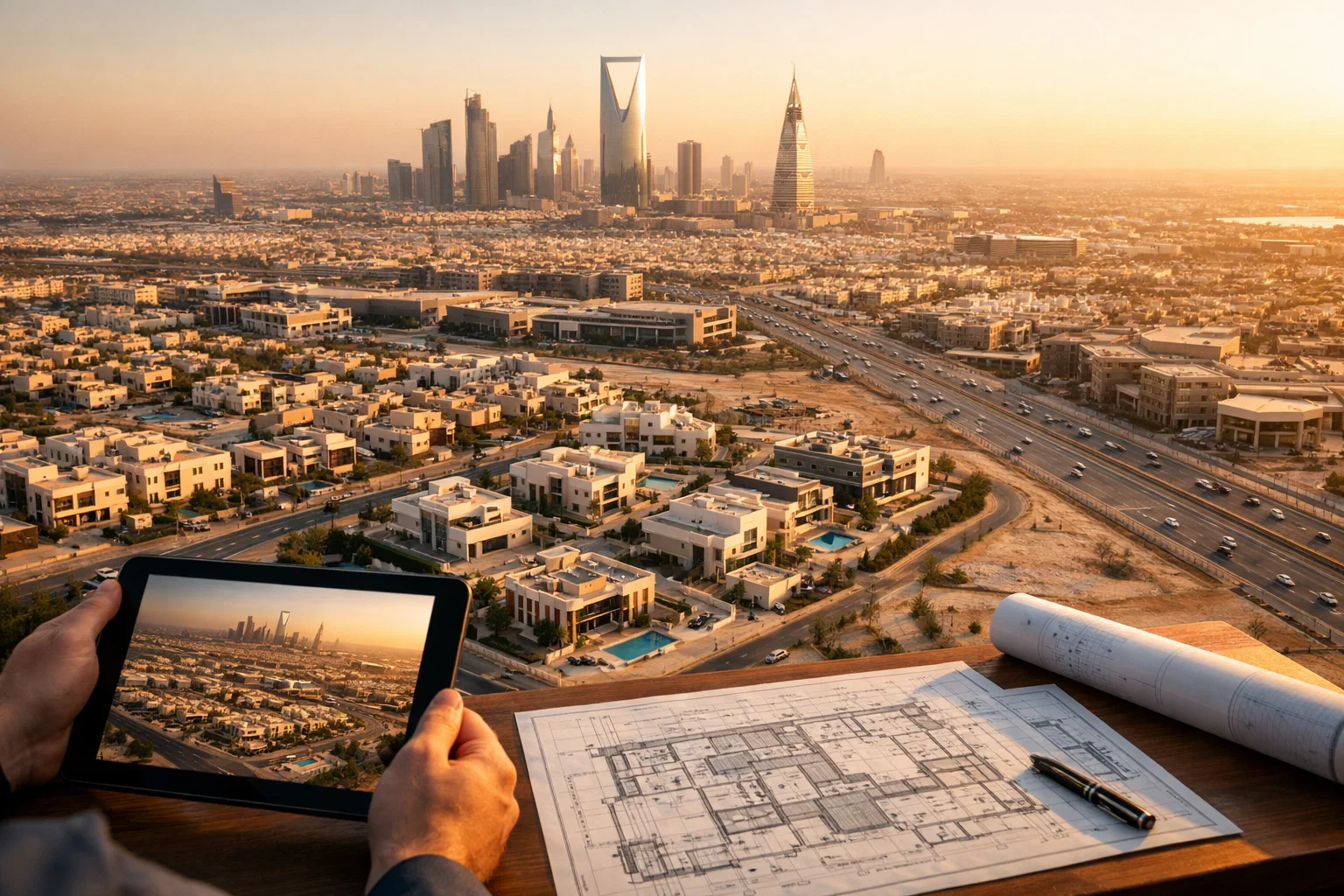
A suitable real estate development location in Riyadh should match five things:
The best location is therefore not automatically the most expensive or most popular district.
It is the location that creates the strongest fit between site + market + intended use.
Riyadh is a large and diverse property market.
Districts across the city can differ in:
This means a site that works well for apartments may not be equally suitable for offices, retail or another property type.
The Real Estate General Authority’s Real Estate Indicators Platform allows users to explore market indicators by location and property type, and district-level searching is available for Riyadh.
Start with the intended user.
Ask:
A family-oriented residential project and a commercial office project should not use the same location criteria.
Access can significantly affect how practical a development becomes.
Consider:
For commercial developments, visibility and convenient access may be particularly important.
Residential users may value proximity to:
The importance of each amenity depends on the target user.
Do not assume that strong Riyadh-wide demand applies equally everywhere.
Use district-level evidence such as:
REGA’s official platform provides updated real estate indicators designed to support more data-driven market decisions.
A district may have high demand but also high competing supply.
Developers should review:
The goal is to understand whether the proposed development adds something useful to the local market.
Before committing to a site, confirm whether the intended development is compatible with applicable planning and regulatory requirements.
A commercially attractive concept still needs to be practical and permitted for the site.
Future roads, infrastructure, commercial activity and surrounding development may influence the long-term suitability of a site.
However, future expectations should support the decision rather than replace current market evidence.
Riyadh should not be divided into simple “good” and “bad” zones.
Different areas can support different development models.
North Riyadh includes established and expanding residential and commercial districts.
Depending on the specific district, development opportunities may relate to:
Site evaluation should still be conducted at neighborhood level rather than assuming all northern districts behave similarly.
West Riyadh includes expanding residential areas such as Tuwaiq, where Al Rossais has multiple development examples.
Aliah Tuwaiq is a residential community in West Riyadh with 159 units, while Durrat Tuwaiq includes 170 residential units in the Tuwaiq district. Tuwaiq Center provides a different local example through office and retail development.
These projects show why a single district can support more than one property use when the concept matches local demand.
Central locations can support different development formats where accessibility, density and surrounding urban activity make the project appropriate.
Centra Tower is a residential and commercial high-rise in central Riyadh, illustrating a denser mixed-use development model.
Al-Manar Project combines 73 residential apartments and 16 retail showrooms in Al Manar district, providing another example of how residential and commercial uses can be integrated within a local neighborhood context.
A location decision should combine local knowledge with current market data.
Useful indicators may include:
REGA’s Real Estate Indicators Platform provides periodically updated sales and rental indicators and supports geographic filtering, including district-level searches in Riyadh.
Developers should use these indicators to test assumptions, not as automatic recommendations.
Non-Saudi Property Ownership in Saudi Arabia 2026: Legal Framework, Conditions & Investment Opportunities Saudi Arabia’s real estate sector is undergoing...
Residential and commercial developments often require different location characteristics because they serve different users and market needs.
| Factor | Residential Development | Commercial Development |
|---|---|---|
| Main User | Individuals and families | Businesses and customers |
| Key Demand Signal | Housing need | Business and tenant activity |
| Services | Schools, healthcare and daily amenities | Business services and customer access |
| Accessibility | Important | Often critical |
| Visibility | Usually secondary | Often more important |
| Parking | Important | Can be critical |
| Local Environment | Strong influence | Depends on business use |
Key point: neither residential nor commercial location is automatically better. The strongest site is the one that matches the intended property use, target users and local market conditions.
Before selecting a site, ask five questions:
A location that fails several of these tests may need further analysis before development proceeds.
Common mistakes include:
A disciplined site decision should be based on evidence rather than reputation alone.
Al Rossais' project portfolio provides practical examples across different Riyadh districts and property types, showing how location and intended use work together in real estate development.
Residential and commercial development in Al Manar district, Riyadh.
Office and retail development in Tuwaiq district, West Riyadh.
Residential development in Tuwaiq neighborhood, West Riyadh.
Residential development in Tuwaiq district, West Riyadh.
Residential and commercial high-rise development in central Riyadh.
These examples show how different Riyadh locations can support different development models when the property type is aligned with local market conditions.
Explore additional developments in the Al Rossais Projects Portfolio .
The best real estate project location in Riyadh is not simply the most popular or expensive district.
Riyadh offers different development environments across its districts. Site selection should therefore be based on the needs of the specific project and its intended users rather than broad assumptions about the city.
With over 75 years of experience, Abdulmohsin Al Rossais & Sons Group Co. is a trusted name in real estate development in Riyadh.
The company supports investors by providing:
This expertise enables investors to make informed decisions and reduce risk.
Learn the complete real estate development process in Saudi Arabia and how location selection plays a key role at every stage
A good location matches the target user, property type, accessibility, local demand and applicable land-use requirements.
No. Different Riyadh districts serve different users and property types. The best area depends on the specific development concept and market demand.
West Riyadh includes expanding residential districts such as Tuwaiq, where multiple residential developments exist. Site suitability should still be assessed at project and district level.
Not necessarily. Residential projects are driven mainly by household needs, while commercial projects often depend more heavily on business activity, visibility and customer access.
Future infrastructure can be relevant, but it should support rather than replace evidence of current market demand and practical site suitability.
Aliah Tuwaiq, Durrat Tuwaiq and Tuwaiq Center are examples from the Tuwaiq area of West Riyadh.