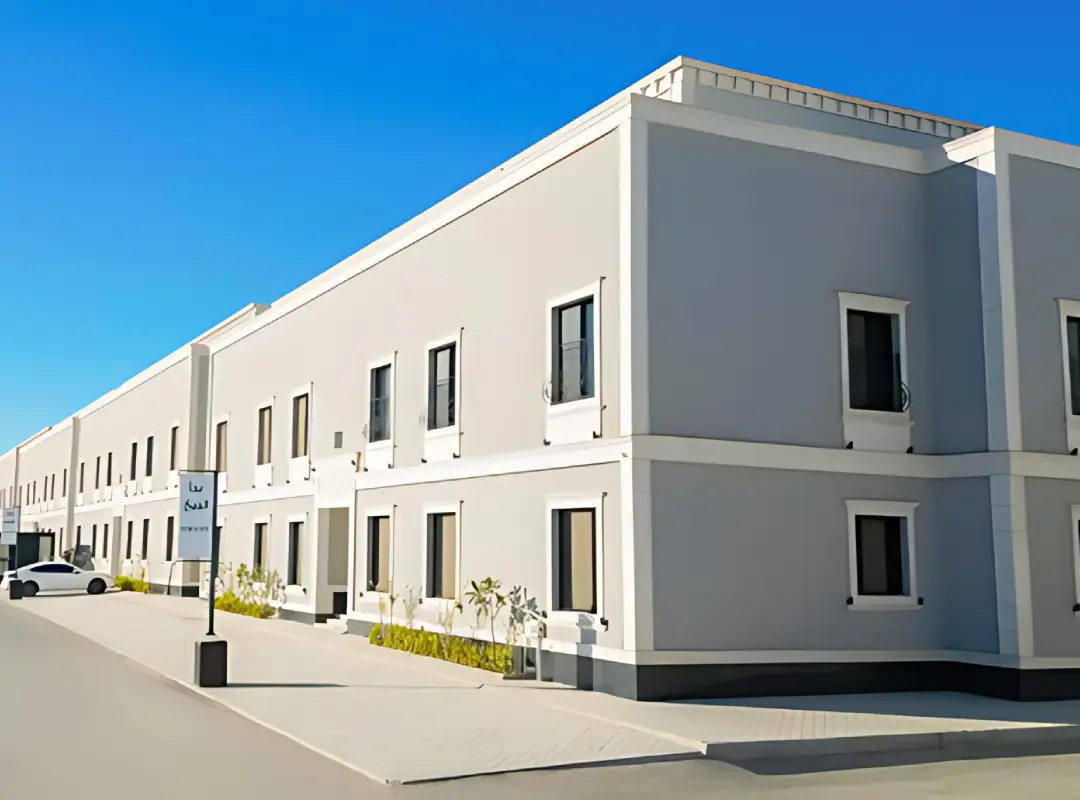
April 11, 2025/
Al-Rassais Group announces the completion of its new residential project in the Tuwaiq district of Riyadh, consisting of 17 buildings...
Real estate development in Saudi Arabia moves through a series of connected decisions—from identifying a viable property opportunity to planning, approvals, construction, completion and eventual operation or handover.
A strong development process is not simply a construction schedule. It is a coordinated framework that connects market demand, land, feasibility, design, regulation, execution and the future use of the completed asset.
In Saudi Arabia, the exact requirements depend on the project type, location, ownership structure and whether the project is developed, marketed or sold under specific regulatory frameworks. For applicable off-plan projects, the Real Estate General Authority (REGA) sets formal procedures relating to developer registration, project documentation, escrow arrangements, project completion and other regulatory requirements.
This guide explains the real estate development process step by step while keeping project types, investment returns and commercial service information on their dedicated pages.
For a broader explanation of development itself, see our Real Estate Development in Saudi Arabia guide.

The real estate development process is the sequence used to transform a land or property opportunity into a completed, usable real estate asset.
A practical development lifecycle usually includes:
Each stage reduces a different type of uncertainty before the project moves forward.
The process begins by understanding what the market actually needs.
Before detailed design or construction planning, the developer should identify:
The objective at this stage is not to finalize the project.
It is to answer a more fundamental question:
Is there a credible reason for this development to exist?
A residential opportunity should be supported by residential demand. A commercial concept should reflect business, retail or tenant requirements. A mixed-use project needs evidence that the proposed uses can support one another.
This market-first approach reduces the risk of designing an asset before confirming that a suitable market exists.
Once the opportunity is clear, the site must be evaluated against the proposed use.
Important considerations can include:
A good site for one development type may be unsuitable for another.
For example, a residential project may benefit from schools, services and neighborhood accessibility, while a commercial development may depend more heavily on visibility, traffic, business activity or customer access.
For a deeper location-focused analysis, see our guide to choosing a real estate project location in Riyadh.
Before substantial capital is committed, the development concept should be tested financially and operationally.
A feasibility assessment commonly examines:
The purpose is not simply to produce an attractive return figure.
It is to determine whether the development concept remains viable when realistic costs, timing and market assumptions are applied.
For applicable off-plan projects, Saudi regulatory procedures can require detailed documentation, including information relating to project status, designs, building permits and financial arrangements.
Planning and design are the bridge between the commercial concept and the physical project.
This stage should translate the development strategy into a design that is:
The first design decisions define the project’s broad form, including:
The concept should remain aligned with the original market need.
Adding unnecessary complexity can increase cost without improving market value.
The development then moves into more detailed architectural and engineering coordination.
Depending on the project, this can involve:
The objective is to produce coordinated documentation that can support approvals and construction.
The required approvals depend on the specific project and regulatory framework.
For applicable off-plan development activity, REGA’s procedural framework includes requirements connected to project architectural designs, engineering drawings or building permits, developer documentation and project registration procedures.
Developers should verify the requirements that apply to their particular project through the relevant Saudi authorities before proceeding.
Poor coordination during planning and design can later create:
Strong design management therefore protects both the physical project and its commercial objectives.
After the design and required approvals are sufficiently established, the project moves into physical execution.
Construction management typically involves coordination between:
The development team should monitor several core areas.
Scope
Construction should remain aligned with the approved design and project objectives.
Programme
Progress should be measured against an agreed project schedule.
Cost
Changes, variations and procurement decisions should be tracked against the development budget.
Quality
Work should be inspected and verified against project requirements.
Coordination
Architectural, structural and building-services work must remain coordinated throughout execution.
The goal is not merely to build quickly. It is to deliver the intended asset while maintaining control over scope, time, cost and quality.
A completed project has little commercial value if the intended market does not understand or adopt it.
Market preparation can therefore begin before physical completion, depending on the project’s business model and regulatory requirements.
Activities may include:
Developers should not assume that pre-sales or off-plan marketing can begin automatically.
For projects governed by Saudi off-plan regulations, REGA’s procedures include specific requirements relating to project registration, marketing arrangements, booking amounts and escrow-related documentation.
The applicable requirements should therefore be confirmed before undertaking regulated off-plan marketing or sales activity.
Construction completion is not necessarily the end of the development process.
A project may still require:
For applicable off-plan developments, REGA’s procedural manual includes formal project-completion requirements such as completion certificates, engineering reports, buyer handover records and project budget documentation.
The exact completion and handover process varies by project.
The important principle is that the development should transition in a controlled way from construction project to functioning property asset.
| Stage | Main Question |
|---|---|
| 1. Opportunity Assessment | Is there real market demand? |
| 2. Site Assessment | Is this site suitable for the intended use? |
| 3. Feasibility | Does the project work financially and operationally? |
| 4. Planning & Design | Can the concept be designed and approved properly? |
| 5. Construction | Can the approved project be delivered under controlled scope, cost, time and quality? |
| 6. Marketing / Leasing | How will the completed property reach its intended market? |
| 7. Completion & Handover | How will the project become a functioning real estate asset? |
This structure presents the development lifecycle in a clear sequence, making the process easier for property owners, developers, search engines and AI answer systems to understand.
Regulatory requirements can affect several stages of a real estate development rather than appearing at only one point in the process. The exact requirements depend on the project type, location and applicable Saudi regulatory framework.
Saudi Regulatory Reference
The Real Estate General Authority (REGA) publishes procedural requirements for relevant sale and lease of off-plan real estate projects, including requirements connected with project registration, documentation, licensing, escrow arrangements, construction monitoring and project completion.
This content provides a general overview of the real estate development process and does not replace project-specific regulatory, technical or legal advice. Requirements should be verified with the relevant Saudi authorities for the specific development.
Delays can occur when important decisions are left unresolved between stages.
Common sources include:
A strong process reduces these risks by resolving major decisions progressively instead of postponing them until construction.
Al-Rassais Group announces the completion of its new residential project in the Tuwaiq district of Riyadh, consisting of 17 buildings...
There is no universal timeline for a real estate development project.
Duration depends on factors such as:
A small residential development may follow a very different timeline from a large mixed-use or commercial project.
For this reason, development schedules should be created for the specific project rather than relying on a generic Saudi-wide duration
The next stage depends on the business model.
A completed property may be:
Where the asset will remain in operation, property management becomes increasingly important.
Learn more about Property Management Services for the operational stage after development.
To avoid repeating the same information across multiple pages, Al Rossais separates related real estate development topics according to their search intent and user purpose.
This internal structure helps each page answer a distinct search question, while connecting users to the most relevant next step without duplicating the same development content.
The real estate development process in Saudi Arabia is strongest when each stage confirms that the project remains aligned with market demand, site suitability, financial feasibility, regulatory requirements and its intended long-term use.
Each stage should validate the next major commitment before the project moves forward.
The strongest development process is not necessarily the fastest one. It is the process that identifies important decisions early, coordinates them correctly and transforms a viable property concept into a completed, usable real estate asset.
The first step is opportunity and market assessment. The developer should establish the intended use, target customer and evidence of market demand before committing to detailed project design.
Feasibility should be assessed before major development commitments are made. It helps determine whether expected revenue, development costs, timing and project risks support the proposed concept.
The project concept is translated into coordinated architectural and engineering designs. Site use, building layout, access, systems, infrastructure and applicable approval requirements are developed before construction.
Yes. Applicable permits and approvals form part of the planning and regulatory stage. The exact requirements depend on the type and location of the project and the regulatory framework that applies.
Some projects may involve off-plan sale or leasing, but regulated off-plan activity is subject to applicable Saudi requirements. REGA’s framework includes project, marketing, booking and escrow-related procedures for relevant projects.
The project generally moves through inspections, completion documentation, testing, handover and preparation for sale, leasing, management or operation.
The development process focuses on creating or transforming a property. Investment may involve acquiring an already completed property without carrying out development.
The Real Estate General Authority publishes the regulatory and procedural framework for applicable sale and lease of off-plan real estate projects.