Real Estate Transaction Tax in Saudi Arabia (2026): How Much Will You Pay & Who Is Exempt?
If you are planning to buy property in Saudi Arabia—whether it’s a residential apartment in Riyadh or a long-term investment—there’s one critical cost you cannot ignore: real estate transaction tax.
At first glance, it seems simple. The tax is 5% of the property value. But in reality, many buyers and investors either misunderstand how it applies or miss out on legal exemptions that could save them thousands of Saudi Riyals.
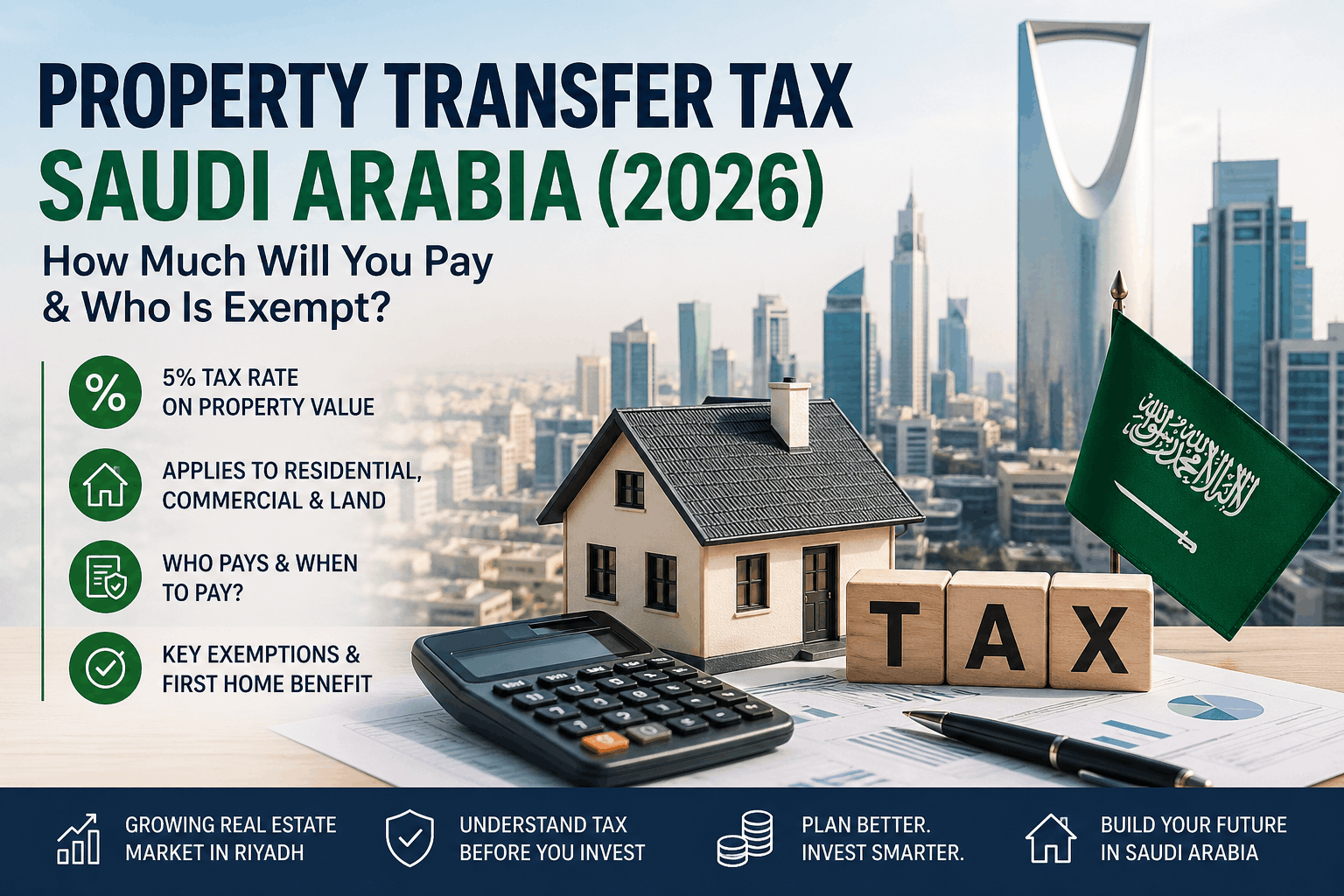
In a fast-growing real estate market like Riyadh, where property demand continues to rise, understanding transaction costs is no longer optional—it’s essential. A small miscalculation can significantly impact your overall investment return.
Based on practical market experience and advisory insights from leading developers such as Abdulmohsin Al Rossais & Sons Group Co., buyers who fully understand property taxes make smarter financial decisions and avoid unnecessary costs.
This guide will walk you through everything you need to know about property transfer tax in Saudi Arabia in 2026, including real examples, exemptions, and strategies to reduce your tax burden legally.
Understand the complete property transfer process in Saudi Arabia including taxes, ownership transfer steps, legal requirements, and associated transaction costs in 2026
What Is Real Estate Transaction Tax in Saudi Arabia?
Real estate transaction tax in Saudi Arabia is a government-imposed tax of 5% applied to the total value of a property when ownership is transferred.
This tax applies to:
- Property sales (residential and commercial)
- Land transactions
- Ownership transfers under certain legal arrangements
Unlike some countries, the tax is calculated on the full transaction value, not profit. That means whether you’re buying or selling, the tax is based on the agreed property price.
Property Transfer Tax Saudi Arabia: What International Buyers Should Know
Saudi Arabia applies the same 5% transaction tax to both local and foreign investors. There is no separate rate for international buyers.
However, foreign investors must consider:
- Ownership regulations and approved zones
- Legal requirements for investment properties
- Compliance with Saudi real estate laws
For international investors entering the Riyadh market, understanding these rules—along with the tax structure—is crucial to avoiding delays and unexpected costs.
How to Calculate Real Estate Transaction Tax (With Real Riyadh Examples)
The calculation itself is straightforward:
Property Value × 5% = Tax Amount
But the financial impact varies depending on property type and location.
Apartment Example (Riyadh)
A mid-range apartment priced at SAR 700,000
→ Tax = SAR 35,000
Villa Example
A villa valued at SAR 1,800,000
→ Tax = SAR 90,000
Commercial Property Example
A commercial unit worth SAR 3,000,000
→ Tax = SAR 150,000
In high-demand areas of Riyadh, these amounts can significantly affect your total investment cost.
Who Pays the Real Estate Transaction Tax? (Important Legal Insight)
A common misconception is that the seller always pays the tax.
In reality:
The tax applies to the transaction itself, not a specific party.
In most cases, the seller covers the cost. However, it is legally negotiable, and both parties can agree on who pays it.
That’s why clearly defining tax responsibility in the contract is essential to avoid disputes later.
Residential vs Commercial Property Tax Impact in Saudi Arabia
While the tax rate remains fixed at 5%, the financial impact differs:
- Residential properties: Lower overall tax due to lower values
- Commercial properties: Higher tax burden due to higher prices
- Investment properties: Tax directly affects ROI calculations
For investors, this difference plays a major role in long-term profitability.
Explore a detailed guide to real estate investment in Saudi Arabia and how taxes, costs, and market trends impact your investment returns in Riyadh
First Home Tax Exemption in Saudi Arabia (Eligibility & Savings Explained)
Saudi Arabia offers a major benefit for first-time homebuyers.
Eligible buyers can receive:
Tax exemption up to SAR 1,000,000 of property value
This means:
- Reduced upfront cost
- Easier entry into the property market
However, eligibility depends on government housing program criteria, so proper verification is important before assuming exemption.
Real Estate Transaction Tax Exemptions in Saudi Arabia
Several transactions are exempt from the tax, including:
- Property transfer through inheritance
- Gifts between close family members
- Transfers between spouses
- Certain government-related transactions
Understanding these exemptions can help buyers and sellers reduce unnecessary expenses.
Common Property Tax Mistakes Buyers Make in Saudi Arabia
Many buyers lose money due to avoidable mistakes such as:
- Ignoring available exemptions
- Not documenting agreements properly
- Misunderstanding payment timing
- Relying on incorrect information
These mistakes are especially common among first-time buyers in Riyadh’s fast-moving market.
When and How to Pay Property Transfer Tax in Saudi Arabia
The tax must be paid before ownership transfer is completed.
The process typically includes:
- Calculating the tax amount
- Paying through official digital platforms
- Verifying payment
- Completing ownership transfer
Without payment, the transaction cannot be legally finalized.
Saudi Real Estate Market Growth & Tax Impact in 2026 (Riyadh Trends & Investment Data)
Riyadh’s real estate market continues to expand rapidly due to:
- Population growth
- Vision 2030 development projects
- Increased demand for housing and investment properties
This growth means higher property values—and consequently higher tax amounts.
For investors, transaction tax is no longer a minor cost—it’s a core factor in ROI calculations.
Learn how to buy property in Saudi Arabia step by step with a complete breakdown of costs, taxes, legal procedures, and real examples from Riyadh market
How to Legally Reduce Real Estate Transaction Tax in Saudi Arabia
While the tax cannot be avoided illegally, it can be managed smartly:
- Take advantage of first-home exemptions
- Structure transactions carefully
- Plan purchase timing
- Understand all applicable regulations
Smart investors always include tax planning as part of their strategy.
Make Smarter Property Decisions in Saudi Arabia
Real estate transaction tax is not just a government fee—it’s a key part of your total investment cost.
In a competitive market like Riyadh, understanding this tax can help you:
- Avoid unexpected expenses
- Plan your finances accurately
- Maximize your investment returns
For buyers and investors looking for reliable guidance, working with experienced developers such as Abdulmohsin Al Rossais & Sons Group Co. ensures smarter decisions backed by real market expertise.
Frequently Asked Questions (Real Estate Transaction Tax Saudi Arabia)
The real estate transaction tax in Saudi Arabia is 5% of the total property value, applied when ownership is transferred during a sale or legal transaction.
The tax is applied to the transaction itself, not a fixed party. In most cases, the seller pays it, but it can be negotiated between buyer and seller and must be clearly stated in the contract.
Yes, eligible first-time buyers can benefit from a tax exemption of up to SAR 1,000,000, depending on government housing program conditions.
Yes, foreign investors must pay the same 5% real estate transaction tax, but they must also comply with Saudi property ownership regulations and approved investment zones.
The tax must be paid before the ownership transfer is completed, and the transaction cannot be legally finalized without proof of payment through official systems.
In most cases, inherited properties and gifts between close family members are exempt, but the eligibility depends on specific legal conditions and documentation.