Buying Land in Saudi Arabia: Bank Financing, Title Deed Checks & Investment Tips
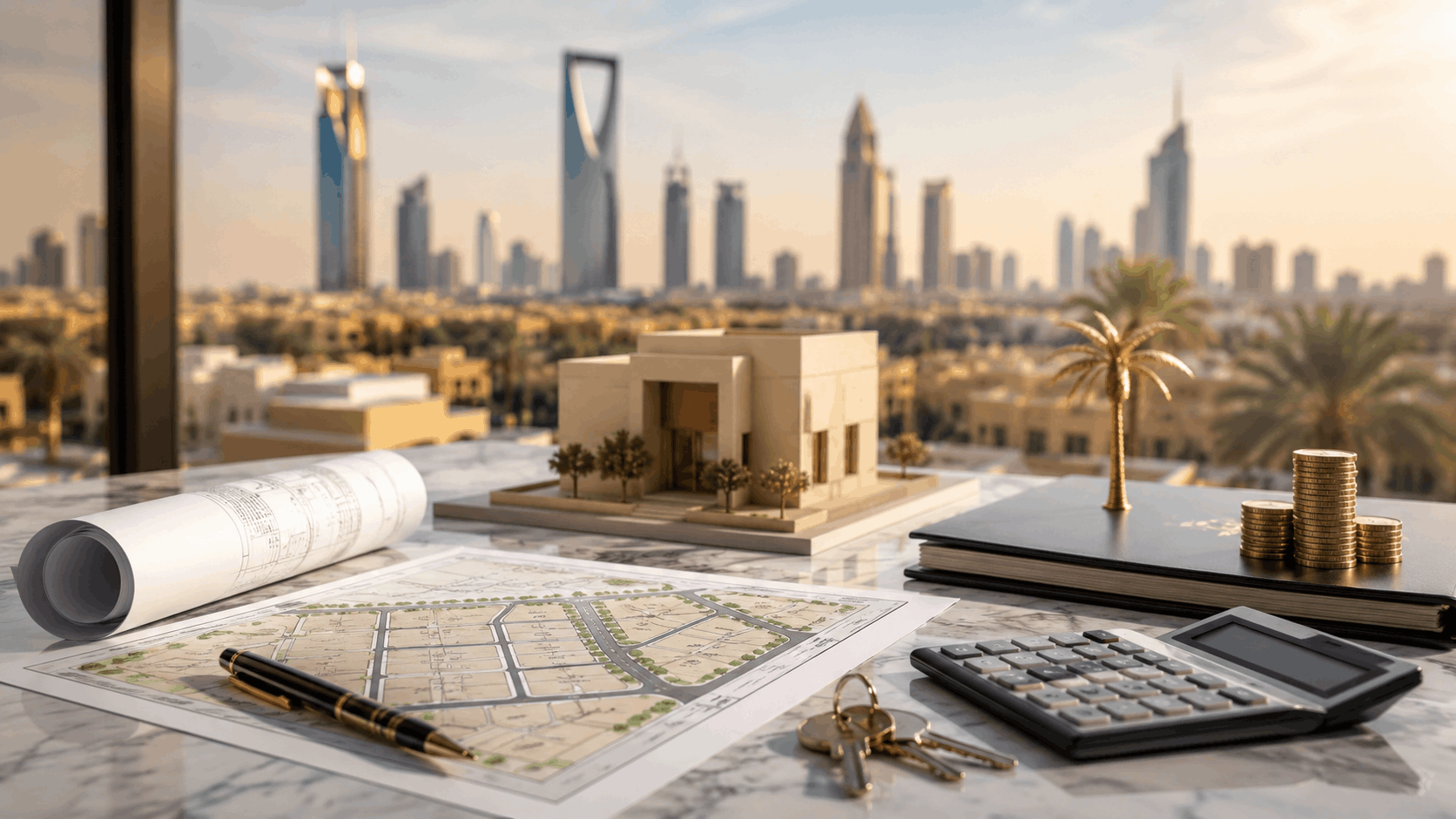
Buying land in Saudi Arabia requires more than comparing prices. A buyer should check the title deed, ownership details, approved land use, location, infrastructure, market value, and future growth potential before making a decision. Bank financing may help buyers complete the purchase, but financing approval alone does not mean the land is the right investment. A smart decision should combine legal verification, market research, location analysis, and long-term financial planning.
Buying land in Saudi Arabia can be a strong real estate decision for homeowners, investors, and developers. Some buyers purchase land to build a private home, while others look for residential, commercial, or mixed-use opportunities with long-term value. However, land is different from a ready property because its future value depends heavily on location, permitted use, infrastructure, demand, and development potential.
For buyers considering bank financing, the decision becomes even more important. A bank may approve the buyer financially, but the land itself still needs to be reviewed carefully. Before buying land through a bank in Saudi Arabia, buyers should understand what banks may check, what documents may be required, and what real estate risks should be reviewed before signing any agreement.
This guide explains the key steps, title deed checks, financing considerations, common mistakes, and practical tips before buying land in Saudi Arabia.
Why Buying Land in Saudi Arabia Requires Careful Planning
Buying land in Saudi Arabia is a long-term real estate decision. Unlike buying a ready villa, apartment, or commercial unit, land often needs future planning before it becomes usable or profitable. Its value depends on what can be built on it, where it is located, how strong the surrounding demand is, and whether infrastructure and services are available.
A low price may look attractive at first, but cheap land is not always a good opportunity. A plot with weak access, unclear use, limited services, or low demand may create future challenges. On the other hand, a well-located plot in a growing area may offer stronger value even if its purchase price is higher.
Buyers should review the land from three angles: legal, financial, and real estate value. The legal side includes title deed clarity and ownership verification. The financial side includes affordability, financing obligations, and additional costs. The real estate side includes location, demand, infrastructure, approved use, and future resale potential.
Careful planning helps buyers avoid emotional decisions and choose land based on clear facts, not only on price or bank approval.
Key Checks Before Buying Land in Saudi Arabia
Before buying land in Saudi Arabia, the first step is to verify the title deed. The title deed should clearly show the owner, land area, location, and any restrictions or obligations related to the property. Buyers should not make payment or sign any agreement before reviewing the deed and matching its details with the actual land.
The second key check is the location. Land value is strongly connected to where the plot is located. Buyers should study access roads, nearby services, utilities, surrounding projects, residential demand, commercial activity, and future development potential.
Approved land use is also important. A residential plot may not be suitable for commercial use, and a commercial plot may require a deeper market study before purchase. Buyers should confirm whether the land use matches their goal before moving forward.
Market value should also be reviewed carefully. A buyer should compare the asking price with similar plots in the same area. This helps identify whether the price is fair or inflated. A land deal should not be judged only by size; location quality, access, services, and future demand can make a major difference.
Future resale value is another important factor. The best land is not only land that can be purchased today, but land that can remain useful, attractive, and valuable in the future.
Can You Buy Land Through a Bank in Saudi Arabia?
Yes, buying land through a bank in Saudi Arabia may be possible depending on the buyer’s eligibility, the bank’s policy, and the land’s suitability for financing. Banks usually review the buyer’s income, existing obligations, repayment ability, credit profile, and overall financial stability.
The land itself may also be reviewed before financing approval. A bank may consider the title deed, land location, market value, approved use, valuation result, and risk level. This means the buyer must qualify financially, and the land must also be acceptable from a real estate and financing perspective.
Before applying, buyers should compare real estate financing options in Saudi Arabia before buying land. Financing terms may differ between banks, including repayment period, profit rate, fees, early settlement rules, and documentation requirements.
Bank financing can make land ownership more accessible because the buyer does not need to pay the full amount upfront. However, it also creates monthly obligations. For this reason, buyers should calculate the total cost carefully and make sure the purchase fits their long-term financial plan.
Key Requirements Before Buying Land with Bank Financing
Bank financing for land in Saudi Arabia generally depends on two main areas: the buyer’s financial profile and the land’s real estate profile.
From the buyer’s side, banks may review income stability, employment status, monthly obligations, credit history, and repayment capacity. A buyer with stable income and manageable commitments may have a stronger chance of approval than someone with high existing obligations.
From the land side, the bank may review the title deed, land location, approved use, market value, valuation report, and ownership documents. If the land has unclear documentation, weak demand, or legal concerns, financing may become more difficult.
Documents may include personal identification, proof of income, bank statements, seller information, land deed details, valuation documents, and any additional documents required by the bank.
A buyer should also understand the difference between initial approval and final approval. Initial approval does not always guarantee the completion of financing. Final approval may depend on the full review of the buyer, the land, the deed, and the valuation.
Title Deed Checks Before Buying Land
Title deed verification in Saudi Arabia is one of the most important steps before buying land. A title deed helps confirm ownership, land area, location, and legal status. Without a clear title deed, even a well-located plot can become risky.
Before payment, buyers should confirm that the deed details match the actual land. The area, boundaries, location, and ownership information should be reviewed carefully. Any mismatch should be clarified before signing.
Buyers should also check whether there are restrictions, disputes, mortgage records, or obligations that may affect transfer, resale, financing, or development. This step is especially important for investors and developers because title deed issues can delay construction, resale, or future project planning.
A clear title deed gives the buyer more confidence and reduces the risk of future ownership problems. This is why every buyer should understand how to verify a real estate title deed in Saudi Arabia before making a final decision.
Residential Land vs Commercial Land in Saudi Arabia
Residential land and commercial land in Saudi Arabia are not evaluated in the same way. Each type has different use, demand, risk level, and investment potential.
| Factor | Residential Land | Commercial Land |
|---|---|---|
| Main Use | Private homes, villas, or residential projects | Shops, offices, mixed-use, or business projects |
| Key Value Driver | Family demand, services, and neighborhood quality | Visibility, access, traffic, and business activity |
| Risk Level | Usually moderate depending on location | Can be higher depending on market demand |
| Best For | Home buyers and long-term holders | Investors, developers, and business-focused buyers |
| Main Check | Services, buildability, and neighborhood demand | Zoning, access, visibility, and commercial activity |
Residential land is often linked to housing demand. Buyers may purchase residential land to build a home, develop villas, or hold the plot for future value. In this case, important factors include neighborhood quality, nearby services, schools, roads, and family demand.
Commercial land depends more on business activity and location strength. A commercial plot may be suitable for retail, offices, mixed-use projects, or other business-related developments depending on approved use. For this type of land, visibility, traffic movement, accessibility, and nearby population are very important.
Commercial land may offer strong investment potential in the right location, but it may also carry higher risk if the area does not support business activity. This is why commercial land in Saudi Arabia requires deeper market study before purchase.
Real Estate Factors to Check Before Buying Land
Land investment in Saudi Arabia depends on several real estate factors. The first is location quality. A plot in a growing area with strong demand may perform better over time than land in an isolated or inactive location.
Access is also important. Land near main roads, public services, active neighborhoods, or commercial areas may offer better usability and resale potential. Poor access can reduce future value even if the plot size is large.
Utilities and services should also be reviewed. Availability of electricity, water, sewage, roads, and nearby facilities can affect both current usability and future development cost. Land without basic services may require more time and planning before it becomes practical.
Future development potential is another key factor. Buyers should look at nearby projects, infrastructure improvements, urban expansion, and market activity in the area. A plot located near future development zones may have stronger long-term prospects if demand continues to grow.
The shape and usable area of the land also matter. Some plots may have irregular shapes, limited frontage, or layout restrictions that reduce their practical value. A smart land purchase should consider both the current price and future usability.
Buying Land in Riyadh: Why Location Matters
Buying land in Riyadh requires special attention because the city has active real estate demand and different levels of value across its districts. Land prices and future potential can vary significantly depending on road access, infrastructure, surrounding projects, and nearby services.
In Riyadh, buyers should study how close the land is to main roads, residential communities, commercial centers, schools, services, and future development areas. A well-connected plot may have stronger resale potential than land that is far from active demand.
Nearby development can also influence value. New residential projects, commercial zones, road expansions, and infrastructure improvements may increase interest in surrounding land over time.
However, buyers should not assume that every plot in Riyadh is automatically a good investment. The best land is not always the cheapest land. A better decision is based on location strength, title deed clarity, approved use, fair market value, and realistic future demand.
For investors and buyers, reviewing the best areas to buy property in Riyadh can support better planning and reduce risk.
Common Mistakes to Avoid When Buying Land
One of the most common mistakes is buying land only because it is cheap. A low price can hide weak location, poor access, limited services, unclear use, or low future demand.
Another common mistake is ignoring title deed verification. Buyers should not depend only on verbal information, informal promises, or general descriptions. The ownership documents should be checked before any payment.
Some buyers also forget to confirm approved land use. This can create problems later if the buyer wants to build, develop, or use the land in a way that is not permitted.
Depending only on initial bank approval is another risk. Initial approval does not always mean final financing approval. The bank may still review the land, documents, valuation, and other conditions before completing the financing process.
Underestimating extra costs is also a frequent mistake. Buyers should calculate valuation costs, financing costs, transfer-related expenses, documentation fees, and future development costs where applicable.
A final mistake is ignoring resale potential. Land should be evaluated not only for today’s purchase, but also for how useful, sellable, or developable it may be in the future.
Is Buying Land in Saudi Arabia a Good Investment?
Buying land in Saudi Arabia can be a good real estate investment when the plot has a clear title deed, strong location, approved use, and future growth potential. Land can be attractive for long-term investors because it may benefit from urban expansion, infrastructure development, and increasing demand in selected areas.
However, land investment is not automatically profitable. Value depends on location, demand, accessibility, services, development potential, and market conditions. A cheap plot in a weak location may not deliver strong returns, while a well-positioned plot may hold better long-term value.
Bank financing can support investment by helping buyers purchase land without paying the full price upfront. But financing also creates monthly obligations. A buyer should calculate whether the expected value and future opportunity justify the financial commitment.
Before buying land for investment, buyers should study market trends, compare similar plots, review surrounding development, and understand the risks. A successful land investment is based on research, not assumptions.
Buyers who want stronger investment decisions should also review real estate investment opportunities in Saudi Arabia before choosing a plot.
Practical Tips Before Buying Land in Saudi Arabia
Before buying land in Saudi Arabia, start by defining your goal. Are you buying for residential use, commercial development, resale, or long-term investment? Your goal will affect the location, land type, budget, and financing approach.
Next, verify the title deed before making any payment. Make sure the ownership details, land area, boundaries, and legal status are clear.
Study the location carefully. Look at road access, nearby services, demand in the area, surrounding projects, and future growth potential. Do not make the decision based only on the current price.
If bank financing is part of your plan, compare financing options carefully. Review the repayment period, monthly obligations, fees, and contract terms before signing. Make sure the monthly commitment does not create pressure on your long-term financial situation.
Compare the land price with similar plots in the same area. This helps you understand whether the asking price is fair and whether the land has realistic future value.
Working with an experienced real estate company can help buyers understand land value, location strength, future development potential, and investment risks before making a final decision. This is especially important in active markets such as Riyadh, where land prices and demand can differ significantly from one district to another.
FAQs About Buying Land in Saudi Arabia
Yes, buying land through a bank in Saudi Arabia may be possible if the buyer meets the bank’s financing requirements and the land is acceptable for financing. Banks may review the buyer’s income, credit profile, monthly obligations, title deed, land value, location, and valuation before final approval. Real estate finance activities are regulated through SAMA’s real estate finance framework.
Before buying land in Saudi Arabia, check the title deed, ownership details, land area, location, approved use, access roads, nearby services, market value, and future resale potential. These checks help reduce legal, financial, and investment risks before making a purchase decision.
Title deed verification is important because it helps confirm the property’s ownership, type, status, owner data, rights, restrictions, and obligations. REGA describes a title registration deed as an ownership document issued by the Real Estate Registry to prove property data and related rights or restrictions.
Commercial land financing may be possible depending on the bank’s policy, the buyer’s eligibility, the land’s approved use, market value, and valuation result. Commercial land usually needs deeper study than residential land because its value depends on visibility, access, zoning, business activity, and future demand.
Buying land in Riyadh can be a strong investment when the plot has a clear title deed, good access, suitable approved use, nearby services, and future development potential. However, not every plot in Riyadh is automatically a good investment; buyers should compare location quality, market value, surrounding demand, and resale potential before buying.
Buying land through a bank can help buyers keep more liquidity and purchase land without paying the full amount upfront. Paying cash may reduce long-term financial obligations and financing costs. The better option depends on the buyer’s budget, investment plan, repayment ability, and risk tolerance.
Conclusion: Should You Buy Land in Saudi Arabia?
Buying land in Saudi Arabia can be a strong real estate decision when the land has a clear title deed, suitable location, approved use, and realistic future growth potential. Bank financing may help buyers complete the purchase, but the final decision should never depend on financing approval alone.
A smart buyer should review the title deed, study the location, compare market value, understand approved use, calculate financial obligations, and assess future resale potential before signing any agreement.
In the end, the best land purchase is not simply the cheapest option. It is the land that combines legal clarity, strong location, practical use, and long-term real estate value.